
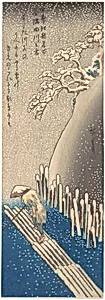
Sumidagawa no yuki|Sumida River in the Snow, from the series "Famous Places in Edo in the Four Seasons"
Medium
Woodblock print (tanzaku size); ink and color on paper
Dimensions
Tanzaku 14 3/4 x 5 in. (37.5 x 12.7 cm)
Classification
Prints
Culture & Period
Japan · Edo period (1615–1868)
Department
Asian Art
Museum
Metropolitan Museum of Art, New York, NY
Credit
The Howard Mansfield Collection, Purchase, Rogers Fund, 1936
Accession Number
JP2503
Rights
Public Domain
Tags
Art Historical Context
Utagawa Hiroshige1797–1858), a master of ukiyo-e woodblock prints, captures the serene beauty of winter in *Sumidagawa no yukiSumida River in the)* from his series *Famous Places Edo in the Four Seasons* (1834). This tanzaku-format print—measuring just 14¾ x 5 inches—icts the iconic Sumida River blanketed in snow, with travelers and bare trees evoking the quiet chill of Edo (modern Tokyo) during the Edo period (1615–1868). Hiroshige's keen eye for everyday landscapes elevated humble scenes into poetic vistas, influencing later artists like Vincent van Gogh. The woodblock technique, using ink and color on paper, allowed for vibrant yet subtle effects: delicate whites for falling snow, cool blues for the river, and stark contrasts highlighting human figures trudging through the wintry hush. Tanzaku prints, originally poem slips, were affordable and popular, adorning homes and reflecting ukiyo-e's focus on the "floating world" of transient beauty. As part of The Metropolitan Museum of Art's Asian Art collection (acquired via The Howard Mansfield Collection in 1936), this work exemplifies Hiroshige's genius in seasonal series, celebrating Edo's landmarks and fostering a cultural appreciation for nature's fleeting moods in Japanese art.
About the Artist
Utagawa Hiroshige · 1826–1869
Utagawa Hiroshige (1797–1858), born Andō Tokutarō, was the last great master of Japanese ukiyo-e woodblock printmaking and one of the most influential landscape artists in history. Born in Edo (modern Tokyo) into a low-ranking samurai family serving as fire wardens, Hiroshige transformed landscape printmaking into a poetic meditation on nature, weather, and everyday life. His revolutionary approac...