
Summer Day
ca. 1939
Medium
Watercolor, opaque watercolor, and graphite on paper
Dimensions
15 1/2 × 22 3/8 in. (39.4 × 56.8 cm)
Classification
Drawings
Department
Modern and Contemporary Art
Museum
Metropolitan Museum of Art, New York, NY
Credit
Gift of New York City W. P. A., 1943
Accession Number
43.47.27
Rights
Public Domain
Tags
Art Historical Context
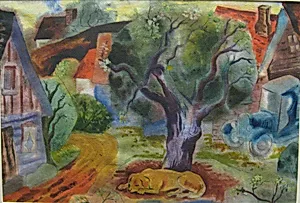
**Summer Day** by Richard Sussman, around 1939, captures essence of an idyllic American summer in watercolor, opaque watercolor (gache), and graphite on paper. This 15½ × 22⅜-inch drawing depicts everyday suburban life—houses and buildings nestled among trees, playful dogs, and vintage cars under a warm sun. As a work classified in the Metropolitan Museum of Art's Modern Contemporary Art department, it evokes the simple joys of leisure amid a changing world. Sussman's piece arrived at the Met in 1943 as a gift from the New York City WPA (Works Progress Administration), President Roosevelt's New Deal program that employed over 8,500 artists during the Great Depression. The WPA fostered realism and regionalism, documenting American scenes with accessible materials like watercolor, which allowed for luminous, fluid effects ideal for evoking summer light and atmosphere. Opaque watercolor added depth and vibrancy to the graphite outlines, blending precision with painterly freedom. This artwork reflects the era's cultural optimism, celebrating ordinary life as a counterpoint to economic hardship. It's a charming window into pre-World War II America, reminding us how art preserved the nation's spirit through public initiatives. (198 words)