
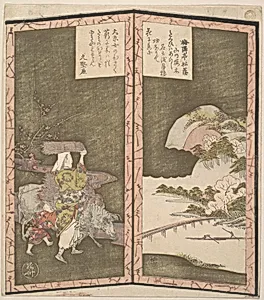
Surimono in shape of small twofold screen
Medium
Woodblock print (surimono); ink and color on paper
Dimensions
8 3/8 x 7 1/16 in. (21.3 x 17.9 cm)
Classification
Prints
Culture & Period
Japan · Edo period (1615–1868)
Department
Asian Art
Museum
Metropolitan Museum of Art, New York, NY
Credit
Rogers Fund, 1921
Accession Number
JP1249
Rights
Public Domain
Tags
Art Historical Context
Step into the refined world of Edo-period Japan (1615–8) with this charming *Surimono in shape of small twofold screen by Ryūryūkyo Shinsai, a master of ukiyo-e wood prints. Crafted as an intimate woodblock print with ink and color on paper this diminutive work (8 3/8 x 7 1/16 in.) mimics the form of a portable twofold screen, blending artistry with everyday objects. Shinsai, active in the early 19th century, was renowned for his delicate designs that captured fleeting beauty, often featuring elegant women, playful animals, and serene landscapes—elements vividly evoked here. Surimono, meaning "printed things," were luxurious, privately commissioned prints produced for poetry clubs, New Year's greetings, or elite patrons, distinguishing them from mass-market ukiyo-e. Shinsai's pieces exemplify this tradition, showcasing exquisite techniques like fine line work, vibrant colors, and subtle gradations achieved through skilled woodblock carving and printing. The screen shape adds whimsy, perhaps nodding to domestic screens that adorned Japanese homes, merging art with architecture. This Rogers Fund acquisition at the Metropolitan Museum of Art highlights surimono's cultural role in fostering literary and visual elegance during Japan's vibrant Edo era, offering a window into a sophisticated, poetic society. A true gem for admirers of Japanese prints!
About the Artist
Ryūryūkyo Shinsai · 1799–1823
Ryūryūkyo Shinsai (柳々居辰斎), active from 1799 to 1823, was a prominent Japanese ukiyo-e printmaker based in Edo (modern Tokyo), renowned for his mastery of surimono—luxurious, privately commissioned woodblock prints produced for elite poetry circles and New Year's celebrations. He began his training under Tawaraya Sōri before becoming a student of the legendary Katsushika Hokusai, from whom he recei...