
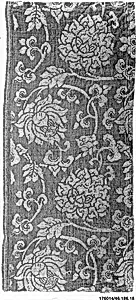
Sutra Cover
Unknown Artist
17th–18th century
Medium
Silk
Dimensions
13 x 5 3/4 in. (33.02 x 14.61 cm)
Classification
Textiles-Woven
Culture & Period
China · Qing dynasty (1644–1911)
Department
Asian Art
Museum
Metropolitan Museum of Art, New York, NY
Credit
Rogers Fund, 1946
Accession Number
46.186.18
Rights
Public Domain
Tags
Art Historical Context
This exquisite **Sutra Cover** from Qing dynasty (16441911), dating to the 17th–18th century, exemplifies era's mastery of silk weaving. Crafted by an unknown artist, this delicate textile (13 x 5 3/4 in.) served a sacred purpose: protecting Buddhist sut, or scriptures, during storage or transport in temples. Acquired through the Rogers Fund in 1946, it now graces the Metropolitan Museum of Art Asian Art collection. Woven from luxurious silk, the cover likely features intricate floral motifs—a tag highlighting blooming flowers that symbolized prosperity, purity, and the Buddhist paradise in Chinese art. Qing artisans perfected techniques like tapestry weaving or embroidery on silk, achieving vibrant colors and fine detail that reflected imperial patronage and technological refinement. These textiles were not mere utilities but status symbols, blending artistry with devotion. In Qing society, such covers underscored Buddhism's enduring influence amid Confucian and Daoist traditions, inviting reverence for the written word. Imagine monks carefully wrapping ancient scrolls in this shimmering silk, preserving wisdom across generations—a testament to China's textile legacy.