
Suzu
Unknown Artist
17th century
Medium
Wood, metal
Dimensions
H. 13 1/2 × Diam. 7 1/2 in. (34.3 × 19 cm)
Classification
Idiophone-Shaken-crotal bell
Culture
Japanese
Department
Musical Instruments
Museum
Metropolitan Museum of Art, New York, NY
Credit
The Crosby Brown Collection of Musical Instruments, 1889
Accession Number
89.4.94
Rights
Public Domain
Art Historical Context
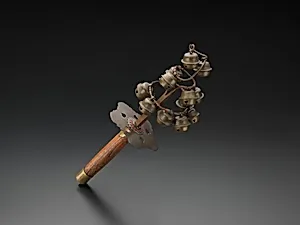
Nestled in the Metropolitan Museum of Art's Crosby Brown Collection of Musical Instruments, this 17th-century *Suzu* exemplifies exquisite Japanese craftsmanship from the Edo period Crafted from wood and metal, the shaken crotal bell stands 13½ inches tall with a 7½-inch diameter. Its design features a wooden handle topped by resonant metal spheres containing loose pellets that rattle melodiously when shaken, classifying it as an idiophone self-sounding instrument that vibrates to produce tone. In Japanese Shinto tradition, *suzu* bells hold profound cultural and spiritual significance. Priests wield them during rituals, kagura dances, and purification ceremonies to invoke kami (spirits), cleanse spaces, and ward off malevolent forces. The shimmering sound mimics falling jade or rainfall, symbolizing purity and divine presence. This artifact, likely used in temple or shrine practices, reflects the era's blend of artistry and devotion, where everyday materials like wood and metal were transformed into sacred tools. Though the artist remains unknown, the *Suzu*'s precise construction highlights anonymous artisans' mastery, bridging music, religion, and aesthetics. Visitors can imagine its chime echoing through ancient ceremonies, a timeless link to Japan's vibrant heritage. (198 words)