
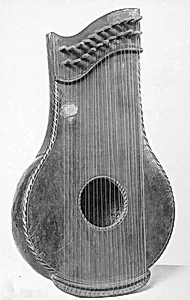
Svaramandala
Unknown Artist
late 19th century
Medium
Gourd, wood
Dimensions
L. 49.5 cm (19-1/2 in.), Diam. of body 27.3 cm (10-3/4 in.)
Classification
Chordophone-Zither-plucked
Culture
Indian
Department
Musical Instruments
Museum
Metropolitan Museum of Art, New York, NY
Credit
The Crosby Brown Collection of Musical Instruments, 1889
Accession Number
89.4.269
Rights
Public Domain
Art Historical Context
Nestled in the Metropolitan Museum of Art's Crosby Brown Collection of Musical Instruments the *Svaramandala* is a captivating late 19th-century Indian chordophone-zither, meticulously crafted from gourd and wood. Measuring 49.5 cm in length with a resonant body diameter of 273 cm, this plucked string instrument exemplifies the ingenuity of traditional Indian luthiery. The gourd serves as a natural resonator, amplifying the vibrations of its strings, while the wooden frame provides structural elegance and durability—materials chosen for their acoustic properties and availability in India's diverse landscapes. As a zither classified under chordophones, the *Svaramandala* belongs to a rich lineage of stringed instruments central to Indian classical music traditions. Plucked with fingers or plectra, it produces shimmering, sustained tones ideal for melodic exploration and drone accompaniment, reflecting the improvisational spirit of ragas. Though the artist remains unknown, such instruments highlight the anonymous mastery of regional craftsmen, blending functionality with subtle aesthetic refinement. Acquired in 1889, this piece offers visitors a tangible link to India's sonic heritage, inviting reflection on how soundscapes shaped cultural rituals, performances, and daily life in the colonial era. A true gem for music lovers, it underscores the Met's commitment to preserving global musical artistry.