
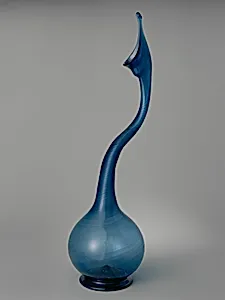
Swan-Neck Bottle (Ashkdan)
Unknown Artist
probably 19th century
Medium
Glass; mold-blown, tooled
Dimensions
H. 15 1/8 in. (38.4 cm) Max. Diam 4 7/16 in. (11.2 cm)
Classification
Glass
Department
Islamic Art
Museum
Metropolitan Museum of Art, New York, NY
Credit
Edward C. Moore Collection, Bequest of Edward C. Moore, 1891
Accession Number
91.1.1559
Rights
Public Domain
Art Historical Context
Behold the elegant **Swan-Neck BottleAshkdan)**, a graceful testament to 19th-century Islamic glassmaking artistry, now housed in the Metropolitan Museum of Art Department of Islamic Art. Standing at 15 1/8 inches tall with a maximum diameter of 7/16 inches, its slender, curving neck evokes the poise of a swan, it both a functional vessel—likely for perfumes, oils or rosewater—and a decorative marvel. Attributed to an unknown artist, this piece hails from the Edward C. Moore Collection, bequeathed in 1891, highlighting the Met's rich holdings in Islamic decorative arts. Crafted through mold-blown and tooled techniques, the bottle showcases sophisticated glassworking methods prevalent in the Islamic world. Mold-blowing involved heating glass and blowing it into a patterned mold to create textured surfaces, while tooling allowed artisans to refine the shape with precise hand tools, achieving the fluid, organic form. These labor-intensive processes reflect the high level of skill in regions like Persia or Central Asia, where glassware blended utility with aesthetic refinement during the 19th century. This bottle offers a window into Islamic cultural traditions, where such vessels symbolized luxury and hospitality, often used in daily rituals or as gifts. Its survival underscores the enduring appeal of Islamic glass, prized for translucency and form, inviting visitors to appreciate the anonymous craftsmen's mastery in creating beauty from fragile material.