
Swept frame
Unknown Artist
1750–60
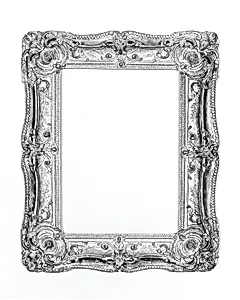
Medium
Oak lower moldings and feather keys; lime upper moldings
Dimensions
Overall: 31 11/16 × 25 13/16 in. (80.5 × 65.5 cm) Sight: 21 7/16 × 15 9/16 in. (54.5 × 39.6 cm) Rabbet: 22 1/2 × 16 1/8 in. (57.2 × 41 cm)
Classification
Frames
Culture
French
Department
Robert Lehman Collection
Museum
Metropolitan Museum of Art, New York, NY
Credit
Robert Lehman Collection, 1975
Accession Number
1975.1.2259
Rights
Public Domain
Art Historical Context
Step into the opulent world of 18th-century France with this exquisite *Swept frame* from 1750–60, a masterful example of period frame-making now housed in the Metropolitan Museum of Art's Robert Lehman Collection. Craft by an unknown artisan, its design features sweeping, fluid curves—characteristic of the era's dynamic lines—that would have elegantly encased a painting, elevating it as both protector and ornament. The frame's construction highlights skilled woodworking techniques: sturdy oak forms the lower moldings and feather keys (traditional wooden joints for stability), while softer limewood shapes the upper moldings, ideal for intricate carving. Measuring 31 11/16 × 25 13/16 inches overall, with a sight size of 21 7/16 × 15 9/16 inches, it was precisely engineered to fit artworks via its rabbet groove (22 1/2 × 16 1/8 inches). These material choices reflect French craftsmanship during Louis XV's reign, when frames were not mere supports but sculptural statements in gilded interiors. As a standalone treasure in the Lehman Collection (gift of 1975), this frame invites us to appreciate the unsung artistry behind the masterpieces it once framed— a testament to the cultural splendor of Rococo-era France, where every detail whispered luxury.