
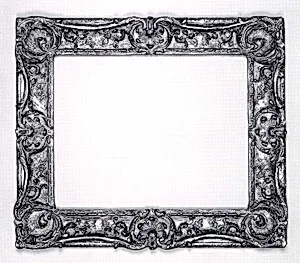
Swept frame
Unknown Artist
1752–55
Medium
Oak lower moldings and feather keys; lime upper moldings. Carved, gilt; orange bole.
Dimensions
Overall: 32 13/16 × 38 1/16 in. (83.3 × 96.7 cm) Sight: 22 1/8 × 27 5/8 in. (56.2 × 70.2 cm) Rabbet: 23 7/8 × 29 3/8 in. (60.7 × 74.6 cm)
Classification
Frames
Culture
French, Lyon
Department
Robert Lehman Collection
Museum
Metropolitan Museum of Art, New York, NY
Credit
Robert Lehman Collection, 1975
Accession Number
1975.1.2267
Rights
Public Domain
Art Historical Context
This exquisite *Swept frame* from Lyon, France, dating to 1752–55, exemplifies the opulent craftsmanship of mid-18th-century decorative arts. Crafted by an unknown artist, it features oak for the sturdy lower moldings and feather, paired with lighter lime wood for the upper sections. The frame is intricately carved, gilded over a vibrant orange bole—a clay-like adhesive that provides a rich, warm undercoat for the gold leaf, creating a luminous finish that catches the light beautifully. Measuring about 33 by 38 inches overall, it frames a sight window of roughly 22 by 28 inches, perfect for portraits or landscapes of the era. In the Rococo style dominant in Louis XV's France, "swept" frames like this one are defined by their fluid, scrolling curves and asymmetry, evoking movement and elegance. Lyon, a hub of luxury silk production and fine woodworking, was renowned for such frames, which elevated paintings and mirrors in aristocratic interiors. The use of contrasting woods and precise joinery highlights the frame-makers' mastery, turning what might seem a mere support into a sculptural masterpiece. Today, this frame graces the Robert Lehman Collection at The Metropolitan Museum of Art (gift, 1975), reminding us how 18th-century frames were integral to the total artistic experience—framing not just images, but the viewer's imagination.