
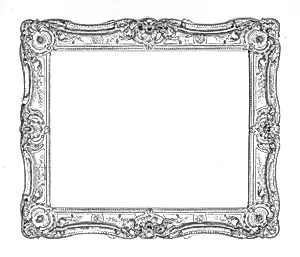
Swept frame
Unknown Artist
ca. 1755
Medium
Oak lower moldings and feather keys; lime upper moldings.
Dimensions
Overall: 4 1/2 × 51 9/16 in. (11.5 × 131 cm) Sight: 31 5/8 × 39 1/2 in. (80.4 × 100.4 cm) Rabbet: 33 1/16 × 41 1/8 in. (84 × 104.5 cm)
Classification
Frames
Culture
French
Department
Robert Lehman Collection
Museum
Metropolitan Museum of Art, New York, NY
Credit
Robert Lehman Collection, 1975
Accession Number
1975.1.2251
Rights
Public Domain
Art Historical Context
Step into the opulent world of 18th-century French interiors with this exquisite *Swept frame*, crafted around 1755 by an unknown. Housed in the Metropolitan Museum of Art's Robert Lehman Collection, this exemplifies the Rococo style's playful elegance, characterized by its sinuous, S-shaped "swept" contours that evoke movement and asymmetry. Designed to encase a painting of substantial size—offering a sight window of about 31⅝ × 39½ inches—it would have adorned a canvas in a lavish salon, where frames were as much a statement of taste as the artwork they held. Masterfully constructed, the frame features robust oak for the lower moldings and feather keys, providing structural integrity and subtle grain texture, while lighter lime wood graces the upper moldings for finer carving potential. Feather keys—thin wooden wedges—secure the corners, a clever joinery technique ensuring stability without visible metal. This combination of woods reflects French framing traditions, balancing durability with the delicate scrolling motifs typical of the Louis XV era. Though unattributed, its craftsmanship highlights the skilled workshops of mid-1700s Paris, where frames elevated art from mere decoration to immersive experience. A testament to Rococo's fleeting exuberance before Neoclassicism's rise, this piece invites us to appreciate the unsung artistry that framed masterpieces. (198 words)