
Swing Torch
c. 1936
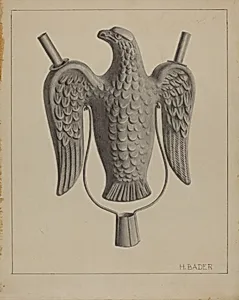
Medium
graphite on paperboard
Dimensions
overall: 28.8 x 22.8 cm (11 5/16 x 9 in.) Original IAD Object: 12 1/4" high; 9" wide
Classification
Index of American Design
Department
CG-W
Museum
National Gallery of Art, Washington, D.C.
Credit
Index of American Design
Accession Number
1943.8.15254
Rights
Public Domain
Art Historical Context
Herman Bader's *Swing Torch* (c. 1936) is a meticulous graphite drawing on paperboard, capturing the elegant form of an early American lighting fixture. Measuring 28.8 x 22.8 cm, this work depicts a swing torch—likely a decorative outdoor lantern or sconce designed to pivot gracefully, evoking the practical yet ornamental ironwork of colonial-era homes and gardens. The original object, rendered at 12 1/4 inches high and 9 inches wide, exemplifies vernacular American craftsmanship, blending functionality with subtle artistry. Created as part of the Index of American Design (IAD), a Federal Art Project under the Works Progress Administration (WPA), Bader's drawing preserves cultural heritage during the Great Depression. Launched in 1935, the IAD commissioned artists nationwide to document folk art, decorative objects, and designs through precise renderings, ensuring these everyday treasures weren't lost to time. Housed in the National Gallery of Art's collection, it highlights how such WPA initiatives fostered artistic employment while celebrating America's design legacy. Bader's use of graphite allowed for fine lines and shading that faithfully reproduce textures and proportions, making the torch's curves and hardware leap off the page. This piece invites us to appreciate the ingenuity of anonymous makers whose work lit pathways and porches, reminding visitors of the enduring charm in American material culture.
About the Artist
Herman Bader · 1915–2002
Herman Bader is an artist whose life and career are poorly documented in existing historical sources. No birth or death dates have been confirmed, and his nationality or place of work remains uncertain, leaving significant gaps in any account of his development as an artist. The body of work attributed to Bader, preserved in collections, suggests he was a productive figure in his era. His artisti...