
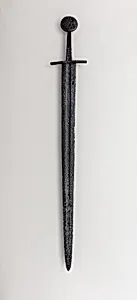
Sword
Unknown Artist
13th century
Medium
Iron
Dimensions
L. 36 1/8 in. (91.8 cm); L. of blade 29 3/4 in. (75.6 cm); W. 5 1/8 in. (13 cm); Wt. 1 lb. 14 oz. (850.5 g)
Classification
Swords
Culture
French
Department
Arms and Armor
Museum
Metropolitan Museum of Art, New York, NY
Credit
Gift of George D. Pratt, 1925
Accession Number
25.188.12
Rights
Public Domain
Art Historical Context
This 13th-century French sword, from iron, exemplifies the weaponry of medieval knights during the High Middle Ages. Measuring 36⅛ inches overall with a 29¾-inch blade, it weighs just under 2 pounds, making it a balanced, one-handed arming sword ideal for thrusting and slashing in close combat. Its modest width of 5⅛ inches at the base suggests a straight, double-edged blade typical of the era, crafted by skilled blacksmiths using hammer-forging techniques to achieve and flexibility without modern steel. In the turbulent world of 13th-century France—marked by feudal wars, the Crusades, and the rise of chivalric culture—this sword would have been both a tool of war and a symbol of status for a noble warrior. Iron, abundant yet demanding to work, allowed for mass production while requiring expert heat treatment to prevent brittleness, highlighting the era's advancing metallurgy. Such arms were essential for mounted knights, embodying the martial prowess central to French society. Now housed in the Metropolitan Museum of Art's Arms and Armor Department, thanks to a 1925 gift from George D. Pratt, this anonymous masterpiece invites us to envision the clash of steel on distant battlefields, bridging us to a time when a well-made sword could decide a kingdom's fate.