
Sword
Unknown Artist
500–700
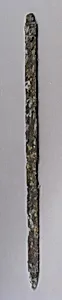
Medium
Iron
Dimensions
Overall: 31 1/8 x 2 1/16 x 3/4 in. (79 x 5.3 x 1.9 cm)
Classification
Metalwork-Iron
Culture
Frankish
Department
Medieval Art
Museum
Metropolitan Museum of Art, New York, NY
Credit
Gift of J. Pierpont Morgan, 1917
Accession Number
17.193.352
Rights
Public Domain
Art Historical Context
This imposing Frankish sword, forged from iron around 500–700 AD during the Merovingian, exemplifies the martial prowess of the Franks—a Germanic people who rose to dominate much of Western Europe after conquering Roman Gaul. Measuring over 31 inches in length, it would have been wielded by a warrior elite, serving as both a deadly weapon and a symbol of in a society where conquest and loyalty to kings like Clovis defined power. Displayed in the Metropolitan Museum of Art's Medieval Art department it was generously gifted by J. Pierpont Morgan in 1917, preserving a tangible link to Europe's turbulent early Middle Ages. Crafted through skilled iron forging techniques typical of the era, the sword's robust blade and simple form highlight the practical artistry of Frankish metalworkers. Lacking ornate decoration common in later medieval arms, its unadorned strength reflects the raw functionality needed for battle, while subtle variations in iron quality suggest early advancements in smelting and hammering. As a cultural artifact, it evokes the Frankish world of epic migrations, Christian conversions, and the foundations of medieval chivalry, inviting us to ponder the hands that once gripped its hilt amid the clash of kingdoms.