
Sword Guard
Unknown Artist
14th–15th century
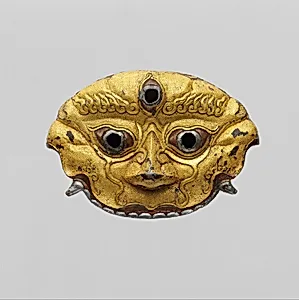
Medium
Iron, gold, silver, copper
Dimensions
H. 3 1/4 in. (8.3 cm); W. 4 3/4 in. (12.1 cm); Wt. 7.55 oz. (214 g)
Classification
Swords
Culture
Tibetan or Chinese
Department
Arms and Armor
Museum
Metropolitan Museum of Art, New York, NY
Credit
Gift of Steven Kossak, The Kronos Collections, 2014
Accession Number
2014.533
Rights
Public Domain
Tags
Art Historical Context
This exquisite sword guard, dating to the 14th–15th century, hails from either Tibetan or Chinese culture and exemplifies the masterful metalwork of Himalayan or East Asian arms traditions. Crafted from iron inlaid with gold, silver, and copper, it measures just 3¼ inches high and 4¾ inches wide, yet weighs a substantial 7.55 ounces, reflecting its robust construction for battlefield use. As part of a sword's hilt, the guard shielded the wielder's hand while serving as a canvas for artistic expression—its tags highlight intricate face motifs, likely evoking protective deities or fierce guardians common in these regions. In the Arms and Armor collection at The Metropolitan Museum of Art, gifted by Steven Kossak of The Kronos Collections in 2014, this piece bridges utility and artistry. During the Yuan or early Ming dynasties in China, or amid Tibet's warrior-monastic culture, such guards were status symbols for elite fighters or lamas. The precious metal inlays, possibly achieved through damascening or piercing techniques, added opulence and symbolic power, warding off evil through stylized faces. Though the artist remains unknown, the guard's survival underscores the enduring allure of these functional jewels, blending fearsome functionality with spiritual depth for visitors to ponder the lives of ancient swordsmen.