
Sword Guard (Tsuba)
Unknown Artist
18th century
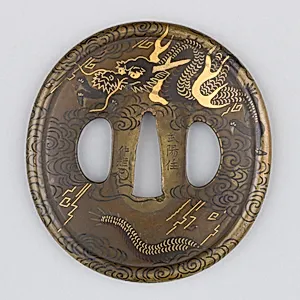
Medium
Brass, copper-gold alloy (shakudō), gold, copper
Dimensions
L. 3 1/2 in. (8.9 cm); W. 3 in. (7.6 cm); thickness 3/16 in. (0.5 cm); Wt. 5.6 oz. (158.8 g)
Classification
Sword Furniture-Tsuba
Culture
Japanese
Department
Arms and Armor
Museum
Metropolitan Museum of Art, New York, NY
Credit
H. O. Havemeyer Collection, Bequest of Mrs. H. O. Havemeyer, 1929
Accession Number
29.100.959
Rights
Public Domain
Tags
Art Historical Context
This elegant 18th-century Japanesetsuba* (sword guard) served as a crucial component of the samurai sword, protecting the hand while showcasing the wearer's status through intricate artistry. Crafted during the Edo period—a time of relative peace when martial arts evolved into refined cultural expressions—these guards transformed from mere utility into miniature sculptures, blending functionality with aesthetic splendor. Measuring about 3.5 inches, this example exemplifies the meticulous metalworking traditions of Japanese sword fittings. Forged from brass, shakudō (a copper-gold alloy prized for its dark patina), gold, and copper, the tsuba likely features dynamic dragon motifs, symbols of power, protection, and imperial authority in Japanese lore. Artisans employed sophisticated techniques like inlaying (zōgan) and patination to create vivid contrasts and depth, turning the guard into a narrative talisman. Such works highlight the zenith of *kinko* (metalworking) craftsmanship, where everyday armor became wearable art. Acquired through the H.O. Havemeyer Collection and now in the Metropolitan Museum of Art's Arms and Armor department, this tsuba invites us to appreciate Japan's fusion of warrior ethos and artistic innovation, a testament to the enduring allure of Edo-period metalwork.