
Sword Guard (Tsuba)
Unknown Artist
15th century
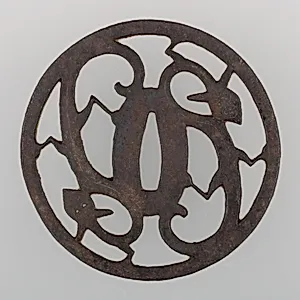
Medium
Iron, gold, copper
Dimensions
Diam. 3 7/16 in. (8.7 cm); thickness 3/16 in. (0.5 cm); Wt. 3 oz. (85 g)
Classification
Sword Furniture-Tsuba
Culture
Japanese
Department
Arms and Armor
Museum
Metropolitan Museum of Art, New York, NY
Credit
Bequest of Hachiro Yamagami, 1981
Accession Number
1981.361
Rights
Public Domain
Art Historical Context
This elegant sword guard, known as a *tsuba*, dates to Japan's Muromachi period (1336–1573), a time of civil strife and cultural refinement under the Ashikaga shogunate. As a key component of the katana's fittings, the tsuba served a practical purpose: protecting the wielder's hand from an opponent's blade while balancing the sword. Crafted in the 15th century, reflects the samurai class's blend of martial utility and aesthetic sensibility, where even weapons became vessels for artistry. Forged from iron and adorned with gold and copper—likely through sophisticated inlay techniques like *zōgan* (metal inlaying)—this tsuba exemplifies the era's masterful metalworking. Its modest dimensions (3 7/16 inches in diameter, weighing just 3 ounces) belie its robust construction, with a thickness of 3/16 inch ensuring durability in battle. Such pieces often featured openwork designs or motifs symbolizing nature, mythology, or Zen philosophy, elevating them to collector's items prized for both form and symbolism. Bequeathed to the Metropolitan Museum of Art in 1981 by Hachiro Yamagami, this anonymous masterpiece invites us to ponder the artistry hidden in Japan's warrior heritage. Gaze closely to appreciate how functionality and beauty intertwined in feudal Japan.