
Sword Guard (Tsuba)
Unknown Artist
ca. 1615–1868
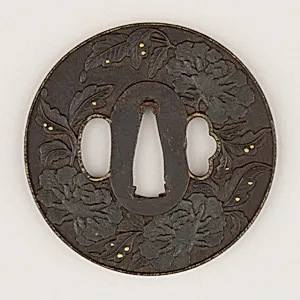
Medium
Iron, gold, copper
Dimensions
Diam. 3 1/8 in. (7.9 cm); thickness 3/16 in. (0.5 cm); Wt. 4.3 oz. (121.9 g)
Classification
Sword Furniture-Tsuba
Culture
Japanese
Department
Arms and Armor
Museum
Metropolitan Museum of Art, New York, NY
Credit
Edward C. Moore Collection, Bequest of Edward C. Moore, 1891
Accession Number
91.1.832
Rights
Public Domain
Tags
Art Historical Context
This exquisite **Sword Guard (Tsub)**, crafted in Japan during the Edo periodca. 1615–1868), the fusion of functionality and artistry in samurai sword fittings. The ta served as a handguard on the katana or wakizashi, preventing the hand from slipping onto the blade while adding balance and protection. In a time of relative peace under the Tokugawa shogunate, such objects evolved from mere armor into status symbols, showcasing the refined metalworking skills of anonymous artisans from various schools. Forged from iron with inlays of shimmering gold and copper, this tsuba measures just 3 1/8 inches in diameter yet weighs a substantial 4.3 ounces, highlighting its robust construction. The floral motifs—evident in its design—reflect Japan's deep appreciation for nature, often symbolizing transience and beauty in Buddhist-influenced aesthetics. Techniques like nunome-zogan (hammered-in metal inlay) allowed for intricate, textured patterns that catch the light, transforming a utilitarian piece into wearable sculpture. Now housed in the Metropolitan Museum of Art's Arms and Armor Department as part of the Edward C. Moore Collection (bequest, 1891), this tsuba invites visitors to ponder the samurai's dual role as warrior and connoisseur, bridging martial tradition with poetic elegance.