
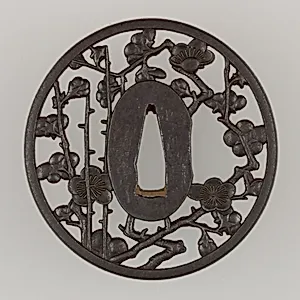
Sword Guard (Tsuba)
Unknown Artist
18th century
Medium
Iron, copper
Dimensions
Diam. 2 7/8 in. (7.3 cm); thickness 3/16 in. (0.5 cm); Wt. 3.6 oz. (102.1 g)
Classification
Sword Furniture-Tsuba
Culture
Japanese
Department
Arms and Armor
Museum
Metropolitan Museum of Art, New York, NY
Credit
Funds from various donors, 1946
Accession Number
46.122.108
Rights
Public Domain
Tags
Art Historical Context
This exquisite **Sword Guard (Tsub)** from 18th-century Japan exemplifies the masterful fusion of function and artistry in samurai sword fittings. Crafted from iron with copper accents, it measures just 2 7/8 inches (7.3 cm) in diameter and weighs a sturdy 3.6 ounces (102.1 g), to protect the wielder's hand while securing the blade to the hilt. The tags hint at intricate plant motifs, a common theme in tsuba designs evoked nature's resilience and seasonal beauty, rendered through precise piercing, chiseling, or inlay techniques. During Japan's Edo period (1603–1868), tsuba evolved from purely utilitarian guards into coveted status symbols for samurai and collectors. Artisans, often working anonymously in renowned schools like those of Goto or Nara, competed to showcase technical virtuosity—balancing weight for combat with delicate openwork that allowed light to play through floral patterns. This piece, acquired by the Metropolitan Museum of Art in 1946 through donor funds, reflects the era's peace-time emphasis on refinement over warfare. Today, such tsuba highlight Japan's "sword furniture" tradition, where even weapons became canvases for poetic expression. Visitors can appreciate how its modest scale belies profound cultural depth, bridging utility, aesthetics, and Zen-inspired harmony with nature.