
Sword Guard (Tsuba)
Unknown Artist
17th century
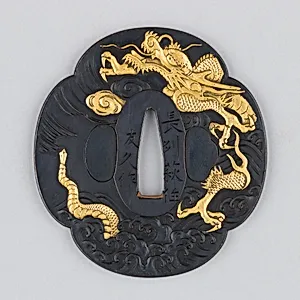
Medium
Copper-gold alloy (shakudō), gold, copper
Dimensions
H. 3 1/8 in. (7.9 cm); W. 2 7/8 in. (7.3 cm); thickness 3/16 in. (0.5 cm); Wt. 4.7 oz. (133.2 g)
Classification
Sword Furniture-Tsuba
Culture
Japanese
Department
Arms and Armor
Museum
Metropolitan Museum of Art, New York, NY
Credit
Gift of Mrs. George A. Crocker (Elizabeth Masten), 1937
Accession Number
38.25.34
Rights
Public Domain
Tags
Art Historical Context
This exquisite 17th-century Japanese guard, or *tsuba*, served as the handguard on a samurai'sana or wakizashi, blending functionality with stunning artistry. Crafted during the Edo period, when peace allowed sword fittings to evolve into miniature masterpieces, it protected the wielder's hand while showcasing the owner's status and taste. Measuring just 3 1/8 by 2 7/8 inches and weighing 4.7 ounces, its compact form belies the intricate skill required to forge it. Made from shakudō—a copper-gold alloy that develops a rich, velvety black patina—accented with gold and copper inlays, the *tsuba* likely features dynamic dragon motifs, symbols of power, strength, and imperial authority in Japanese culture. Artisans employed *zōgan* techniques, flush-inlaying precious metals into the base for vivid contrast, creating lifelike scenes that seem to writhe with energy. These fittings were not mere accessories but expressions of *wabi-sabi* aesthetics, celebrating imperfection and the beauty of aged metal. Now in the Metropolitan Museum of Art's Arms and Armor Department, gifted by Mrs. George A. Crocker in 1937, this *tsuba* offers a window into samurai artistry. Visitors can marvel at how such objects turned weapons into wearable art, embodying Japan's masterful metalworking tradition.