
Sword Guard (Tsuba)
Unknown Artist
ca. 1830
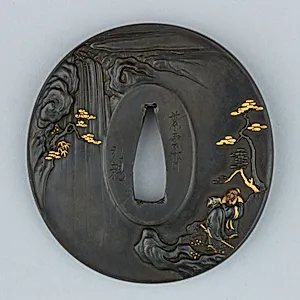
Medium
Copper-silver alloy (shibuichi), copper-gold alloy (shakudō), gold, silver, copper
Dimensions
H. 2 7/8 in. (7.3 cm); W. 2 3/4 in. (7 cm); thickness 3/8 in. (1 cm); Wt. 6 oz. (170.1 g)
Classification
Sword Furniture-Tsuba
Culture
Japanese
Department
Arms and Armor
Museum
Metropolitan Museum of Art, New York, NY
Credit
The Howard Mansfield Collection, Gift of Howard Mansfield, 1936
Accession Number
36.120.17
Rights
Public Domain
Tags
Art Historical Context
This exquisite *Sword Guard (Tsub)*, dating to around 1830, hails from Japan's Edo period, a time when samurai sword fittings evolved into stunning works of art. As the handguard on a katana or wakizashi, the tsuba served both a practical purpose—protecting the hand during combat—and as a canvas for intricate craftsmanship. Crafted by an unknown artist, it exemplifies the refined metalworking traditions of Japanese arms and armor, now housed in the Metropolitan Museum of Art's Howard Mansfield Collection. Made from shibuichi (a copper-silver alloy with a subtle gray patina) and shakudō (a copper-gold alloy known for its deep blue-black sheen), the tsuba is enriched with inlays of gold, silver, and copper. These mixed metals, often decorated using techniques like damascening or hiramaki-e (flat inlay), create dramatic contrasts and textures, highlighting the master's skill in patination and alloy manipulation. At 2⅞ inches high and weighing a substantial 6 ounces, its robust form underscores both functionality and opulence. The design features men amid trees, evoking serene landscapes or narrative scenes common in Edo-era tsuba. Such motifs symbolized harmony with nature and warrior virtues, transforming a weapon component into a wearable sculpture prized by samurai elites. A testament to Japan's fusion of utility and beauty, this piece invites visitors to appreciate the artistry hidden in everyday arms.