
Sword Guard (Tsuba)
Unknown Artist
18th century
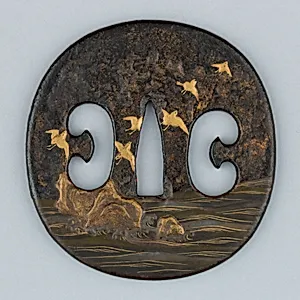
Medium
Iron, lacquer, copper
Dimensions
H. 3 1/4 in. (8.3 cm); W. 3 1/8 in. (7.9 cm); thickness 3/16 in. (0.5 cm); Wt. 5.4 oz. (153.1 g)
Classification
Sword Furniture-Tsuba
Culture
Japanese
Department
Arms and Armor
Museum
Metropolitan Museum of Art, New York, NY
Credit
The Howard Mansfield Collection, Gift of Howard Mansfield, 1936
Accession Number
36.120.31
Rights
Public Domain
Tags
Art Historical Context
This elegant sword guard, or *tsuba*, hails from 18th-century Japan during the Edo period, a time of relative peace when samurai swords became symbols of status rather than just weapons. Crafted for the katana or wakizashi, the tsuba served a practical purpose—protecting the wielder's hand—while evolving into a canvas for artistic expression. Measuring just over 3 inches across and weighing a substantial 5.4 ounces, its robust iron form underscores the era's masterful metalworking traditions. The tsuba showcases sophisticated techniques, with iron as the foundation, enhanced by lacquer and copper elements likely used for inlays or overlays. Bird motifs, a common theme in Japanese art, grace its surface, symbolizing freedom, longevity, or seasonal beauty in Shinto and Buddhist influences. These designs often featured openwork (*sukashi*) or nuanced patination, blending functionality with poetic naturalism. Part of the Metropolitan Museum of Art's Arms and Armor collection, gifted by Howard Mansfield in 1936, this piece highlights the tsuba's role as wearable sculpture. It invites visitors to appreciate Japan's fusion of utility and artistry, where even armor reflected profound cultural harmony.