
Sword Guard (Tsuba)
Unknown Artist
possibly 18th century
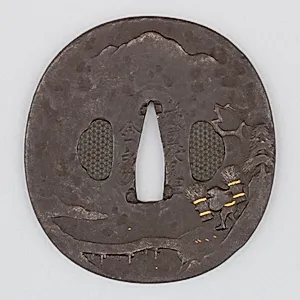
Medium
Iron, gold, silver
Dimensions
H. 3 3/16 in. (8.1 cm); W. 3 in. (7.6 cm); thickness 3/16 in. (0.5 cm); Wt. 4.3 oz. (121.9 g)
Classification
Sword Furniture-Tsuba
Culture
Japanese
Department
Arms and Armor
Museum
Metropolitan Museum of Art, New York, NY
Credit
Gift of Bashford Dean, 1919
Accession Number
19.154.17
Rights
Public Domain
Tags
Art Historical Context
This exquisite **Sword Guard (Tsuba)**, crafted possibly in 18th-century Japan, served as a vital protective element on samurai swords like the katana. Positioned between the blade and handle, the tsuba shielded the wielder's hand while doubling as a canvas for artistic expression. Made of iron inlaid with gold and silver, its compact form—measuring just 3 3/16 inches high and weighing 4.3 ounces—exemplifies the precision of Japanese metalworking during the Edo period, when sword fittings evolved from functional guards into status symbols blending utility and beauty. The design likely features human figures, a common motif in tsuba artistry that could depict warriors, deities, or everyday scenes, rendered through intricate techniques like piercing (openwork) and inlay (zōgan). These methods allowed artisans to create dynamic contrasts between the dark iron ground and shimmering precious metals, highlighting Japan's mastery of mixed-media craftsmanship in arms and armor. A gift to the Metropolitan Museum of Art from collector Bashford Dean in 1919, this tsuba invites us to appreciate the samurai's world—where weapons were not just tools of war, but profound cultural artifacts reflecting discipline, artistry, and heritage.