
Sword Guard (Tsuba)
Unknown Artist
late 17th century
Medium
Iron, copper
Dimensions
H. 3 5/16 in. (8.4 cm); W. 2 15/16 in. (7.5 cm); thickness 3/16 in. (0.5 cm); Wt. 4.3 oz. (121.9 g)
Classification
Sword Furniture-Tsuba
Culture
Japanese
Department
Arms and Armor
Museum
Metropolitan Museum of Art, New York, NY
Credit
Gift of Bashford Dean, 1919
Accession Number
19.154.19
Rights
Public Domain
Tags
Art Historical Context
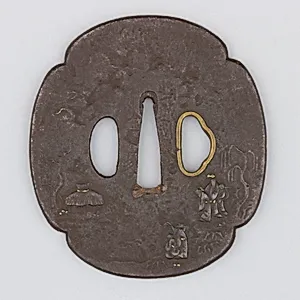
This exquisite **Sword Guard (Tsuba)** from late 17th-century Japan exemplifies the masterful fusion of function and artistry in samurai weaponry. Crafted from iron inlaid or overlaid with copper, it measures just 3 5/16 inches high and weighs a sturdy 4.3 ounces, perfectly suited to protect the wielder's hand on a katana or wakizashi sword. Tsuba like this were essential components of the sword mounting (koshirae), serving as both a practical guard and a canvas for intricate designs—here evoking themes associated with men, perhaps warriors or mythical figures, though the exact motif remains a tantalizing mystery due to the unknown artist. Dating to Japan's Edo period (1603–1868), when peace under the Tokugawa shogunate elevated sword fittings to high art, this tsuba reflects the era's refined metalworking techniques. Artisans employed piercing, chiseling, and inlay methods to create openwork patterns that balanced strength with elegance, turning everyday armor into status symbols for the samurai class. Its robust yet lightweight form highlights the precision of Japanese iron forging, prized for corrosion resistance and aesthetic patina over time. A generous gift to the Metropolitan Museum of Art from collector Bashford Dean in 1919, this piece invites visitors to appreciate how Japanese arms transcended utility, embodying cultural ideals of discipline, beauty, and honor. (198 words)