
Sword Guard (Tsuba)
Unknown Artist
ca. 1615–1868
Medium
Iron, copper
Dimensions
H. 3 1/4 in. (8.3 cm); W. 3 1/8 in. (7.9 cm); thickness 5/16 in. (0.8 cm); Wt. 4.2 oz. (119.1 g)
Classification
Sword Furniture-Tsuba
Culture
Japanese
Department
Arms and Armor
Museum
Metropolitan Museum of Art, New York, NY
Credit
Gift of Bashford Dean, 1919
Accession Number
19.154.32
Rights
Public Domain
Tags
Art Historical Context
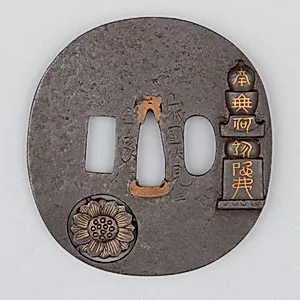
This elegant **Sword Guard (Tsub)** hails from Japan during the Edo period (. 1615–1868), a time of relative peace when samurai culture flourished and sword fittings evolved into high art. As the hand guard on a katana or wakizashi the tsuba served a practical purpose—protecting the wielder's fingers—while showcasing the wearer's status and aesthetic sensibilities. Craft by an unknown artisan, compact form (3¼ x 3 inches) balances functionality intricate beauty, typical of Japanese sword furniture. Forged from iron with copper elements, this tsuba exemplifies masterful metalworking techniques like hammering, piercing, and possibly inlaying to create openwork designs featuring floral motifs. Flowers, a recurring theme in Japanese art, evoke nature's transience and harmony, aligning with Edo-era aesthetics influenced by Zen and ukiyo-e traditions. The substantial weight (4.2 oz.) underscores its durability for combat or ceremonial use. Now in the Metropolitan Museum of Art's Arms and Armor Department, gifted by collector Bashford Dean in 1919, this piece highlights Japan's fusion of warfare and artistry, inviting visitors to appreciate the delicate poetry hidden in a warrior's tool.