
Sword Guard (Tsuba)
Unknown Artist
ca. 1615–1868
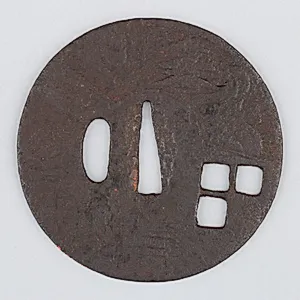
Medium
Iron, copper
Dimensions
Diam. 3 1/16 in. (7.8 cm); thickness 1/8 in. (0.3 cm); Wt. 2.6 oz. (73.7 g)
Classification
Sword Furniture-Tsuba
Culture
Japanese
Department
Arms and Armor
Museum
Metropolitan Museum of Art, New York, NY
Credit
Gift of Bashford Dean, 1919
Accession Number
19.154.47
Rights
Public Domain
Art Historical Context
This elegant sword guard, or *tsuba*, hails from Japan's Edo period (ca.1615–1868), a time of relative peace under the Tokug shogunate when samurai culture flourished. Positioned between the blade and handle of a katana or wakizashi, the tsuba served a practical purpose: protecting the wielder's hand from an opponent's blade while allowing fluid movement. Crafted from iron with copper accents, it measures just 3 1/16 inches in diameter and weighs a mere 2.6 ounces, exemplifying the Japanese mastery of balancing strength and delicacy in metalwork. Tsuba were far more than functional; they were canvases for artistic expression, often featuring intricate piercings, inlays, or motifs drawn from nature, mythology, or daily life. Though the design of this example by an unknown artisan remains unrecorded here, its materials suggest skilled techniques like hammering, forging, and possibly gold or copper overlay—hallmarks of the era's renowned sword fittings (*koshirae*). These objects symbolized status and refined taste among samurai, even as warfare waned. Today, this tsuba graces the Metropolitan Museum of Art's Arms and Armor Department, a gift from collector Bashford Dean in 1919. It invites us to appreciate how Japanese artisans transformed weapons into wearable art, bridging utility, culture, and beauty.