
Sword Guard (Tsuba)
Unknown Artist
ca. 1615–1868
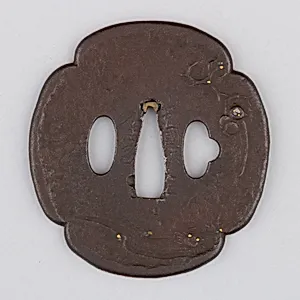
Medium
Iron, copper
Dimensions
H. 2 15/16 in. (7.5 cm); W. 2 3/4 in. (7 cm); thickness 3/16 in. (0.5 cm); Wt. 3.6 oz. (102.1 g)
Classification
Sword Furniture-Tsuba
Culture
Japanese
Department
Arms and Armor
Museum
Metropolitan Museum of Art, New York, NY
Credit
Gift of Bashford Dean, 1919
Accession Number
19.154.70
Rights
Public Domain
Art Historical Context
This exquisite **Sword Guard (Tsub)**, crafted in Japan during the Edo period (ca. 1615–1868), served as a vital component of the samurai sword, protecting the hand from an opponent's blade while allowing fluid blade movement. Made of iron inlaid with copper, it exemplifies the masterful metalworking of the era, when Japan enjoyed relative peace under the Tokug shogunate. Sword fittings like tsuba evolved from purely functional guards into coveted art objects, often featuring intricate piercings, chiseling, or inlays that reflected philosophical or natural motifs—though this example's precise design remains a testament to anonymous artisans' skill. Measuring just under 3 inches across and weighing a substantial 3.6 ounces, its robust yet refined form highlights the balance of strength and elegance prized in Japanese arms and armor. Tsuba were status symbols for samurai, customized to convey personal taste or clan identity, and their production flourished in specialized schools across cities like Edo (modern Tokyo). This piece, gifted to the Metropolitan Museum of Art in 1919 by collector Bashford Dean, invites visitors to appreciate how everyday warrior tools embodied Japan's rich tradition of applied arts. (198 words)