
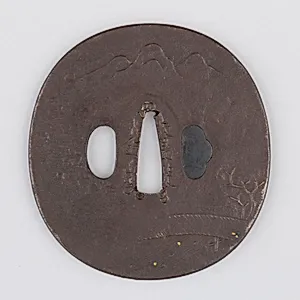
Sword Guard (Tsuba)
Unknown Artist
ca. 1615–1868
Medium
Iron, copper
Dimensions
H. 3 3/8 in. (8.6 cm); W. 3 3/16 in. (8.1 cm); thickness 3/16 in. (0.5 cm); Wt. 5.4 oz. (153.1 g)
Classification
Sword Furniture-Tsuba
Culture
Japanese
Department
Arms and Armor
Museum
Metropolitan Museum of Art, New York, NY
Credit
Gift of Bashford Dean, 1919
Accession Number
19.154.81
Rights
Public Domain
Art Historical Context
This exquisite **Sword Guard (Tsuba)**, crafted by an unknown Japanese artist during the Edo period (ca. 1615–1868), exemplifies the fusion of functionality and artistry in samurai sword fittings. Positioned between the blade and hilt of a katana or wakizashi, the tsuba protected the wielder's hand while serving as a canvas for intricate designs. Measuring just 3 3/8 inches high and weighing 5.4 ounces, its compact iron form inlaid with copper highlights the precision of traditional metalworking techniques like nunome-zogan (gold or copper inlay hammered into etched iron). During Japan's Edo era—a time of relative peace under the Tokugawa shogunate—tsuba evolved from mere armor into collector's items prized for their symbolism and craftsmanship. Often featuring motifs from nature, mythology, or daily life, they reflected the samurai's refined aesthetic and philosophical depth. This piece, now in the Metropolitan Museum of Art's Arms and Armor Department thanks to a 1919 gift from Bashford Dean, invites us to appreciate how everyday objects became emblems of cultural sophistication. Though its specific motif remains unrecorded here, the tsuba's robust yet elegant construction underscores the enduring legacy of Japanese metal artisans, blending utility with poetic beauty.