
Sword Guard (Tsuba)
Unknown Artist
ca. 1615–1868
Medium
Iron, copper alloy (sentoku), copper, gold, silver
Dimensions
H. 3 3/8 in. (8.6 cm); W. 3 in. (7.6 cm); thickness 3/8 in. (1 cm); Wt. 7.6 oz. (215.5 g)
Classification
Sword Furniture-Tsuba
Culture
Japanese
Department
Arms and Armor
Museum
Metropolitan Museum of Art, New York, NY
Credit
H. O. Havemeyer Collection, Bequest of Mrs. H. O. Havemeyer, 1929
Accession Number
29.100.961
Rights
Public Domain
Tags
Art Historical Context
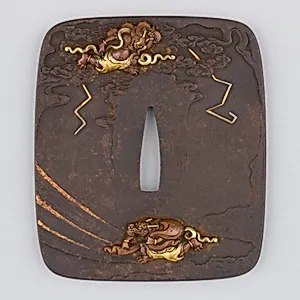
This exquisite **Sword Guard (Tsub)** hails from Japan's Edo period (ca. 1615–1868), a time of relative peace when samurai culture shifted from battlefield prowess to refined artistry. As a key piece of sword furniture, the tsuba served a practical role—shielding the hand from the blade—while evolving into a canvas for elaborate decoration. Crafted by an unknown artisan, this guard exemplifies the period's mastery of metalwork, blending functionality with aesthetic splendor in the Arms and Armor tradition. Fashioned from iron with inlays of copper alloy (sentoku), copper, gold, and silver, the tsuba measures 3⅜ × 3 inches (8.6 × 7.6 cm) and weighs a substantial 7.6 oz. (215.5 g), highlighting its robust construction. The design features monstrous motifs—likely mythical creatures from Japanese folklore—rendered through sophisticated techniques like nunome-zogan (gold and silver inlays hammered into etched iron). These embellishments transformed utilitarian objects into wearable art, symbolizing the wearer's status and warding off evil spirits. A gem from the H.O. Havemeyer Collection, bequeathed to the Metropolitan Museum of Art in 1929, this tsuba invites visitors to appreciate the intersection of craftsmanship, mythology, and samurai heritage. Its intricate details reveal how Edo artisans elevated everyday arms into timeless treasures.