
Sword Guard (Tsuba)
Unknown Artist
ca. 1615–1868
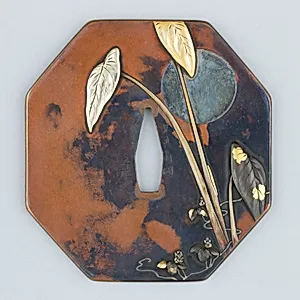
Medium
Copper, copper-gold alloy (shakudō), silver, gold, copper-silver alloy (shibuichi), copper alloy (sentoku)
Dimensions
H. 3 3/8 in. (8.6 cm); W. 3 1/8 in. (7.9 cm); thickness 3/16 in. (0.5 cm); Wt. 5.8 oz. (164.2 g)
Classification
Sword Furniture-Tsuba
Culture
Japanese
Department
Arms and Armor
Museum
Metropolitan Museum of Art, New York, NY
Credit
H. O. Havemeyer Collection, Bequest of Mrs. H. O. Havemeyer, 1929
Accession Number
29.100.1040
Rights
Public Domain
Tags
Art Historical Context
This finely crafted sword guard, or *tsuba*, hails from Japan's Edo period (ca.1615–1868), a time of relative peace when samurai refined their sword mountings into exquisite works of art. Positioned between the blade and handle of a katana, the tsuba served both as a hand guard and a canvas for intricate designs, blending functionality with aesthetic splendor. Measuring about 3⅜ inches high and weighing nearly 6 ounces, this example reflects the era's emphasis on metalwork in arms and armor. Fashioned from an array of alloys—copper, shakudō (a copper-gold patina that darkens to black), shibuichi (copper-silver for a muted tone), sentoku (brassy copper alloy), plus silver and gold—it showcases the Japanese mastery of multi-metal techniques. Delicate leaf motifs, likely rendered through inlays or surface treatments, evoke nature's elegance, a common theme symbolizing transience and harmony in Japanese aesthetics. These materials allowed artisans to achieve rich contrasts, shimmering golds against subdued patinas. Now in the Metropolitan Museum of Art's Arms and Armor Department, gifted through the H.O. Havemeyer Collection in 1929, this tsuba highlights how everyday warrior gear evolved into collector's treasures, bridging utility, craftsmanship, and cultural reverence for the sword as soul of the samurai.