
Sword Guard (Tsuba)
Unknown Artist
ca. 1615–1868
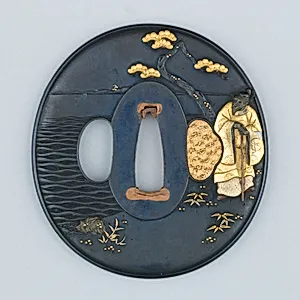
Medium
Copper-gold alloy (shakudō), gold, copper-silver alloy (shibuichi)
Dimensions
H. 2 7/8 in. (7.3 cm); W. 2 5/8 in. (6.7 cm); thickness 1/4 in. (0.6 cm); Wt. 4.3 oz. (121.9 g)
Classification
Sword Furniture-Tsuba
Culture
Japanese
Department
Arms and Armor
Museum
Metropolitan Museum of Art, New York, NY
Credit
H. O. Havemeyer Collection, Bequest of Mrs. H. O. Havemeyer, 1929
Accession Number
29.100.1091
Rights
Public Domain
Tags
Art Historical Context
This exquisite sword guard, or *tsuba*, hails from Japan's Edo period (ca. 1615–1868), a time of relative peace under the Tokug shogunate when samurai culture emphasized artistry over warfare. Measuring about 2⅞ × 2⅝ inches, it served as a protective handguard on a katana or wakizashi sword, blending functionality with stunning decoration. The design features men amid trees, evoking scenes of nature and human harmony, common motifs in Japanese sword fittings that reflected Zen influences and seasonal beauty. Crafted from *shakudō* (a copper-gold alloy that develops a rich black patina), *shibuichi* (a copper-silver alloy with a subtle gray tone), and inlaid gold, the tsuba showcases virtuoso metalworking techniques. Artisans employed chiseling, inlaying (*zōgan*), and chemical patination to create depth and luminosity, transforming a utilitarian object into a wearable sculpture. These mixed-metal alloys were hallmarks of the Goto and other schools, prized for their durability and aesthetic versatility. Part of the Metropolitan Museum of Art's Arms and Armor collection, gifted through the H.O. Havemeyer bequest in 1929, this unsigned masterpiece highlights the Edo era's golden age of *tosogu* (sword fittings). Though swords saw little combat, tsuba like this symbolized status, craftsmanship, and cultural refinement for samurai elites.