
Sword Guard (Tsuba)
Unknown Artist
18th century
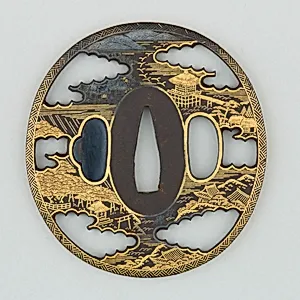
Medium
Iron, gold, silver, copper
Dimensions
H. 3 in. (7.6 cm); W. 2 13/16 in. (7.1 cm); thickness 3/16 in. (0.5 cm); Wt. 3.7 oz. (104.9 g)
Classification
Sword Furniture-Tsuba
Culture
Japanese
Department
Arms and Armor
Museum
Metropolitan Museum of Art, New York, NY
Credit
Gift of Mrs. Adrian H. Joline, 1914
Accession Number
14.60.21
Rights
Public Domain
Tags
Art Historical Context
This exquisite 18th-century Japanese guard, or *tsuba*, served as a protective barrier between the hand and blade on a samurai's katana or wakizashi. Crafted during the Edo period when peace prevailed under the Tokugawa shogunate, tsuba evolved from purely functional armor into coveted art objects. Warriors and collectors prized them for their craftsmanship, often commissioning designs that reflected nature's beauty or philosophical ideals. This example, with its landscape motif, evokes the serene yet dynamic vistas of Japan's mountains, rivers, and forests, blending utility with poetic expression. Forged from iron and inlaid with shimmering gold, silver, and copper, the tsuba showcases masterful metalworking techniques like nunome-zogan (gold and silver inlays hammered into etched iron). Measuring just 3 inches high and weighing a substantial 3.7 ounces, its compact form belies the intricate detailing that would have caught the light during a sword draw. Such fittings were essential to a warrior's arsenal, symbolizing status and aesthetic refinement in a culture where the sword embodied the soul. Now housed in the Metropolitan Museum of Art's Arms and Armor Department—thanks to a 1914 gift from Mrs. Adrian H. Joline—this tsuba invites us to appreciate Japan's fusion of martial prowess and artistic elegance, reminding visitors of the samurai's dual role as fighter and connoisseur.