
Sword Guard (Tsuba)
Unknown Artist
18th century
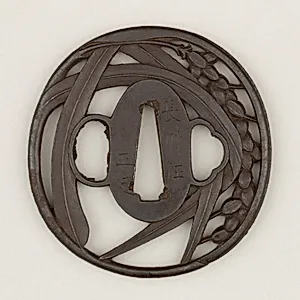
Medium
Iron, copper
Dimensions
H. 2 3/4 in. (7 cm); W. 2 5/8 in. (6.7 cm); thickness 3/16 in. (0.5 cm); Wt. 3.3 oz. (93.6 g)
Classification
Sword Furniture-Tsuba
Culture
Japanese
Department
Arms and Armor
Museum
Metropolitan Museum of Art, New York, NY
Credit
Gift of Mrs. Adrian H. Joline, 1914
Accession Number
14.60.34
Rights
Public Domain
Art Historical Context
This finely crafted Sword Guard, known as a *tsuba*, originates from 18th-century Japan and exemplifies the masterful sword fittings of the Arms and Armor tradition. As a protective hand guard on a samurai sword, the *tsuba* bridged utility and artistry, shielding the wielder while serving as a canvas for skilled metalworkers. During Japan's Edo period, such pieces were essential accessories, often customized to reflect social status and aesthetic refinement. Made of iron with copper accents, this *tsuba* measures 2¾ inches (7 cm) in height, 2⅝ inches (6.7 cm) in width, and just 3/16 inch (0.5 cm) thick, weighing a lightweight 3.3 ounces (93.6 g). The use of these metals highlights Japanese artisans' expertise in forging, piercing, and inlay techniques, creating durable yet elegantly proportioned objects that balanced form and function. A generous gift from Mrs. Adrian H. Joline in 1914, it now resides in the Metropolitan Museum of Art's Arms and Armor Department. This anonymous work invites visitors to appreciate the cultural reverence for craftsmanship in feudal Japan, where even weapons' components were elevated to art.