
Sword Guard (Tsuba)
Unknown Artist
late 17th century
Medium
Iron, silver, copper
Dimensions
H. 3 3/8 in. (8.6 cm); W. 3 1/4 in. (8.3 cm); thickness 3/16 in. (0.5 cm); Wt. 4.3 oz. (121.9 g)
Classification
Sword Furniture-Tsuba
Culture
Japanese
Department
Arms and Armor
Museum
Metropolitan Museum of Art, New York, NY
Credit
Gift of Mrs. Adrian H. Joline, 1914
Accession Number
14.60.44
Rights
Public Domain
Tags
Art Historical Context
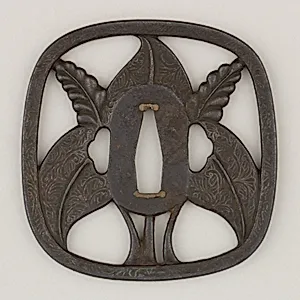
This exquisite **Sword Guard (Tsub)** from late 17th-century Japan exemplifies the masterful metalwork of the Edo period, when samurai sword fittings evolved from functional guards to stunning decorative arts. Crafted primarily from iron with inlays of silver and copper the tsuba served as a hand protector on a katana, preventing the hand from sliding onto the blade while showcasing the wearer's refined taste. Its compact dimensions—3 3/8 inches high 3 1/4 inches wide, weighing just 4.3 ounces—highlight the precision required in Japanese arms craftsmanship. The design, featuring delicate leaf motifs (as suggested by its tags), reflects Japan's deep reverence for nature, a common theme in tsuba artistry. Artisans employed sophisticated techniques like inlaying softer metals into the hardened iron base, creating shimmering contrasts that catch the light. These pieces were not just utilitarian but status symbols, often customized for individual samurai. Now in the Metropolitan Museum of Art's Arms and Armor Department, this tsuba was a generous gift from Mrs. Adrian H. Joline in 1914. Visitors can marvel at how such intricate sword furniture bridges warfare and aesthetics, embodying Japan's cultural fusion of beauty and utility.