
Sword Guard (Tsuba)
Unknown Artist
ca. 300–710
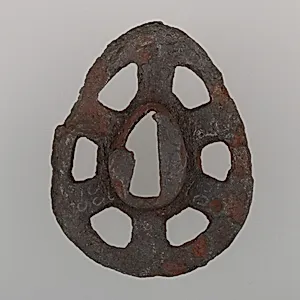
Medium
Iron
Dimensions
H. 2 7/8 in. (7.3 cm); W. 2 1/4 in. (5.7 cm); thickness 3/4 in. (1.9 cm); Wt. 2.1 oz. (59.5 g)
Classification
Sword Furniture-Tsuba
Culture
Japanese
Department
Arms and Armor
Museum
Metropolitan Museum of Art, New York, NY
Credit
Rogers Fund, 1917
Accession Number
17.229.37
Rights
Public Domain
Art Historical Context
This exquisite iron sword guard, known as a *tsuba*, hails from Japan around 300–710 CE, the late Kofun early Asuka periods—a time when ancient warriors crafted practical yet symbolically potent arms. Measuring just 2⅞ inches high and weighing a mere 2.1 ounces, this compact disk fits snugly at the base of a sword's hilt, shielding the hand from an opponent's blade while allowing fluid grip during combat. Acquired through the Rogers Fund in 1917, it now resides in the Metropolitan Museum of Art's Arms and Armor Department, offering a tangible link to Japan's formative martial traditions. Crafted from forged iron, the tsuba exemplifies early metallurgical prowess, where strength and balance were paramount before the ornate designs of later samurai eras. In this pre-Heian age, such guards were essential components of straight-bladed *chokutō* swords, reflecting a culture blending Shinto reverence for weapons with emerging Buddhist influences. Though its maker remains unknown, the piece underscores the tsuba's evolution from utilitarian armor to canvas for artistic expression, foreshadowing centuries of master craftsmanship in metal piercing, inlay, and patination. Visitors will appreciate how this modest artifact reveals the gritty origins of Japanese sword culture—functional art born of necessity, yet enduring as a symbol of resilience.