
Sword Guard (Tsuba)
19th century
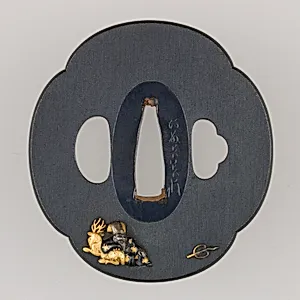
Medium
Copper-gold alloy (shakudō), gold, silver, copper
Dimensions
H. 2 3/4 in. (7 cm); W. 2 9/16 in. (6.5 cm); thickness 5/16 in. (0.8 cm); Wt. 4.4 oz. (124.7 g)
Classification
Sword Furniture-Tsuba
Culture
Japanese
Department
Arms and Armor
Museum
Metropolitan Museum of Art, New York, NY
Credit
Gift of the Baber Family, in loving memory of Charles Chenault Baber, 2012
Accession Number
2012.528.3
Rights
Public Domain
Tags
About this artwork
This sword furniture-tsuba titled "Sword Guard (Tsuba)" by Gotō Mitsuakira dates to 19th century. Executed in copper-gold alloy (shakudō), gold, silver, copper, this work represents Japanese artistic traditions. The piece demonstrates the technical skill and artistic vision characteristic of its period. The work's presence in a major museum collection attests to its significance in the broader narrative of art history. As part of institutional holdings, it serves both scholarly research and publ...
Art Historical Context
This exquisite *Sword Guard (Tsuba)* by Gotō Mitsuira, crafted in the 19th, exemplifies the masterful metalworking traditions of Japan's Edo period. As a vital component of the samurai sword mounting, the tsuba served a practical purpose—shielding the hand from the blade—while doubling as a canvas for artistic expression. Gotō Mitsuakira, from the renowned Gotō school of metal artisans, specialized in intricate designs that blended functionality with beauty, often drawing from nature and daily life. Here, motifs of men and deer likely evoke themes of harmony between humans and the wild, common in Japanese art symbolizing grace, longevity, and the hunt. Fashioned from shakudō—a copper-gold alloy prized for its deep, velvety black patina after chemical treatment—inlaid with gold, silver, and copper, the guard showcases advanced *zōgan* (inlay) and patination techniques. Measuring just 2¾ inches high and weighing 4.4 ounces, its compact form belies the precision required to achieve such lifelike reliefs and shimmering contrasts. These methods highlight the Gotō family's centuries-old legacy, producing fittings for elite warriors and nobility. Now in the Metropolitan Museum of Art's Arms and Armor Department, gifted by the Baber Family in 2012, this tsuba offers a window into Japan's warrior culture and aesthetic refinement, where even weapons were elevated to art. Visitors can appreciate how such pieces bridged utility and poetry in feudal society.