
Sword Hilt
Unknown Artist
possibly 13th–14th century
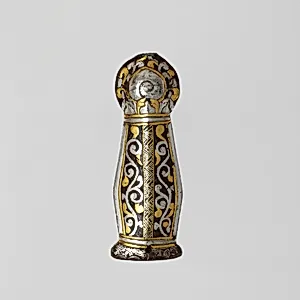
Medium
Iron, gold, silver
Dimensions
L. 4 3/4 in. (12.1 cm); W. 1 3/4 in. (4.5 cm); Wt. 7.5 oz. (212.6 g)
Classification
Swords
Culture
Tibetan, Mongolian, or Chinese
Department
Arms and Armor
Museum
Metropolitan Museum of Art, New York, NY
Credit
Purchase, Bashford Dean Memorial Collection, Funds from various donors, by exchange; Media Marketing Assessment Gift; funds from various donors; and funds from various donors, by exchange, 1999
Accession Number
1999.31
Rights
Public Domain
Art Historical Context
This exquisite sword hilt, dating possibly to the 13th–14th century, hails from the dynamic cultures of Tibet, Mongolia, or China Crafted from sturdy iron inlaid or overlaid with shimmering gold and silver, it just 4¾ inches long (12.1 cm) and weighs 7.5 ounces (212.6 g), comfortably in the hand of a warrior. Now housed in the Metropolitan Museum of Art's and Armor Department, it exemplifies the masterful metalworking of Central Asia during a time of empire-building and nomadic prowess. The hilt's luxurious materials speak to its status as more than mere weaponry—it was likely a symbol of power and prestige for elite fighters or nobility. In an era dominated by the Mongol expansions under Genghis Khan and his successors, such ornate hilts bridged utility and artistry, blending functional iron with precious metals to create objects of both battlefield might and ceremonial splendor. The uncertain cultural attribution reflects the fluid exchanges across these regions, where Tibetan Buddhist influences, Chinese craftsmanship, and Mongolian horse-lord traditions intertwined. Acquired in 1999 through the Bashford Dean Memorial Collection and various donor funds, this hilt invites us to ponder the lives of its long-ago owners: fierce riders who wielded swords as extensions of their identity. A testament to enduring skill, it reminds us how arms could be art.