
Sword-Hilt Collar and Pommel (Fuchigashira)
Unknown Artist
ca. 1615–1868
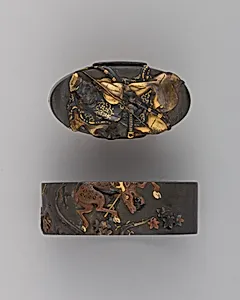
Medium
Copper-silver alloy (shibuichi), gold, copper
Dimensions
Fuchi (a); H. 1 1/2 in. (3.8 cm); Wt. 0.9 oz. (25.5 g); kashira (b); H. 1 5/16 in. (3.3 cm); Wt. 0.6 oz. (17 g)
Classification
Sword Furniture-Fuchi-Kashira
Culture
Japanese
Department
Arms and Armor
Museum
Metropolitan Museum of Art, New York, NY
Credit
H. O. Havemeyer Collection, Bequest of Mrs. H. O. Havemeyer, 1929
Accession Number
29.100.1306a, b
Rights
Public Domain
Tags
Art Historical Context
This exquisite pair of **Sword-Hilt Collar and Pommel (Fuchigashira)** from Japan, dating to around 1615–1868, represents the refined artistry of Edo-period sword fittings. The *fuchi* (collar) and *kashira* (pommel) adorned the hilt of a samurai sword, securing the handle while serving as miniature canvases for decoration. Crafted by an unknown artist, these pieces feature motifs of men and deer,oking themes of nature, hunting, or folklore common in Japanese arms decoration. Made from shibuichi—a copper-silver alloy prized for its subtle, iridescent patina—along with gold and copper, the fittings showcase advanced metalworking techniques like inlaying and gilding. These methods allowed artisans to create intricate designs that balanced functionality with aesthetic appeal, transforming everyday weapons into status symbols for the warrior class. Housed in the Metropolitan Museum of Art's Arms and Armor Department as part of the H.O. Havemeyer Collection, these fittings highlight Japan's *toso* tradition, where sword mounts rivaled paintings in sophistication. They remind us how samurai culture fused martial utility with poetic elegance during a time of relative peace.