
Sword Pommel
Unknown Artist
16th century
Medium
Bronze, gold
Dimensions
H. 2 15/16 in. (7.5 cm); Wt. 10 oz. (295 g)
Classification
Swords-Accessories
Culture
Italian
Department
Arms and Armor
Museum
Metropolitan Museum of Art, New York, NY
Credit
Gift of Stephen V. Grancsay, 1942
Accession Number
42.50.157
Rights
Public Domain
Tags
Art Historical Context
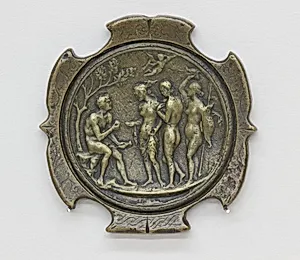
This exquisite 16th-century Italian pommel, crafted from bronze and adorned with gold, exemplifies the fusion of artistry and armament. Measuring just 2 15/16 inches (7.5 cm) in height and weighing a substantial 10 ounces (295 g), it served as the counterweight at the end of a sword, transforming a functional weapon accessory into a miniature sculpture. Housed in the Metropolitan Museum of Art's and Armor Department—thanks to a 1942 gift from Stephen V. Grancsay—its surface features intricate depictions of male and female nudes, evoking the classical ideals revived during Italy's Renaissance. In the opulent courts of Renaissance Italy, sword fittings like this pommel were status symbols for nobility, blending martial utility with humanist aesthetics. The choice of durable bronze, gilded for luster, highlights advanced metalworking techniques such as casting and chasing, allowing for finely detailed human forms in a remarkably small scale. These nude figures reflect the era's fascination with anatomy and mythology, drawing from ancient Greco-Roman art to celebrate the beauty of the human body. Though the artist remains unknown, this pommel's craftsmanship underscores how Italian armorers elevated everyday arms into collector's treasures, bridging warfare and high art. Visitors will appreciate its tactile heft and gleaming patina, a window into a time when even swords whispered of cultural splendor.