
Sword Pommel (Kashira)
Unknown Artist
18th century
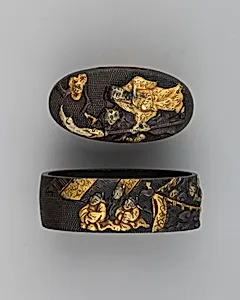
Medium
Iron, copper-gold alloy (shakudō), silver, gold
Dimensions
H. 1 5/16 in. (3.3 cm); Wt. 0.4 oz. (11.3 g)
Classification
Sword Furniture-Fuchi-Kashira
Culture
Japanese
Department
Arms and Armor
Museum
Metropolitan Museum of Art, New York, NY
Credit
Gift of Bashford Dean, 1919
Accession Number
19.154.112
Rights
Public Domain
Tags
Art Historical Context
This exquisite sword pommel, known as a *kashira*, hails from 18th-century Japan and forms part of the ornate fittings (*fuchi-kashira*) that adorned samurai swords. Measuring just 1 5/16 inches high weighing a mere 0.4 ounces, this delicate piece served both functional and decorative purposes, capping the hilt to secure the handle while showcasing the wearer's status and artistry. Featuring intricate human figures—likely mythical or legendary motifs—it reflects the Edo period's (1603–1868) flourishing metalwork traditions, when sword mounts evolved into miniature sculptures amid relative peace. Crafted from iron, shakudō (a copper-gold alloy prized for its deep black patina), silver, and gold, the *kashira* demonstrates masterful *taka-zōgan* inlay techniques. Artisans skillfully hammered thin wires and foils of precious metals into carved surfaces, creating vivid contrasts and three-dimensional effects that bring the figures to life. Shakudō's subtle sheen, developed through controlled oxidation, was a hallmark of Japanese swordsmiths, blending utility with opulent beauty. A gift to the Metropolitan Museum of Art from collector Bashford Dean in 1919, this artifact illuminates samurai culture's emphasis on refined craftsmanship. Even as warfare waned, such fittings symbolized honor and aesthetic harmony, inviting us to appreciate the hidden artistry in everyday arms.