
Sword Pommel (Kashira)
Unknown Artist
ca. 1615–1868
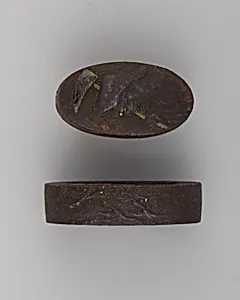
Medium
Iron, gold, copper-silver alloy (shibuichi)
Dimensions
H. 1 5/16 in. (3.3 cm); Wt. 0.4 oz. (11.3 g)
Classification
Sword Furniture-Fuchi-Kashira
Culture
Japanese
Department
Arms and Armor
Museum
Metropolitan Museum of Art, New York, NY
Credit
Gift of Bashford Dean, 1919
Accession Number
19.154.110
Rights
Public Domain
Art Historical Context
This delicate Sword Pommel, or *kashira*, hails from Japan's Edo period (ca.1615–1868), a time of relative peace under the Tokug shogunate when samurai culture emphasized refinement over warfare. As part of a sword's hilt fittings—often paired with a matching *fuchi*—the *kashira* capped the pommel, securing the handle while serving as a canvas for artistry. These small objects (just 1 5/16 inches high weighing a mere 0.4 oz.) transformed functional weapons into symbols of status and aesthetic sophistication. Crafted from iron inlaid with gold and *shibuichi* (a copper-silver alloy known for its velvety, iridescent patina), the piece showcases virtuoso metalworking techniques like damascening or nunome-zogan, where precious metals were hammered into etched iron. Japanese sword furniture like this elevated arms and armor to the realm of sculpture, blending utility with intricate design during an era when swordsmanship gave way to cultural patronage. A gift to the Metropolitan Museum of Art from Bashford Dean in 1919, this *kashira* offers a window into Edo Japan's fusion of martial tradition and artistic excellence, reminding us how even the smallest artifacts carried profound cultural weight.