
Sword Pommel (Kashira)
Unknown Artist
ca. 1615–1868
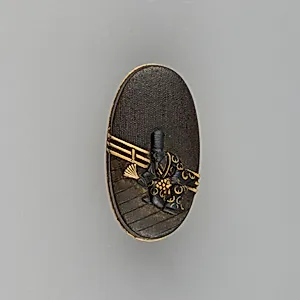
Medium
Copper-silver alloy (shibuichi), copper-gold alloy (shakudō), gold
Dimensions
H. 1 1/4 in. (3.2 cm); Wt. 0.5 oz. (14.2 g)
Classification
Sword Furniture-Fuchi-Kashira
Culture
Japanese
Department
Arms and Armor
Museum
Metropolitan Museum of Art, New York, NY
Credit
H. O. Havemeyer Collection, Bequest of Mrs. H. O. Havemeyer, 1929
Accession Number
29.100.1350
Rights
Public Domain
Tags
Art Historical Context
This exquisite sword pommel, known as a *kashira*, is a finely crafted piece of Japanese sword furniture from the Edo (ca. 1615–1868). As the cap at the end of a katana's hilt, it protected the hand while adding decorative flair to the warrior's weapon. Paired often with a *fuchi* (collar), such fittings transformed functional arms into wearable art, reflecting the samurai's status and aesthetic sensibility during Japan's relatively peaceful era. Crafted from shibuichi—a copper-silver alloy with a subdued, smoky patina—and shakudō, a copper-gold alloy that develops a dark blue-black hue through traditional heat treatment, the pommel showcases masterful metalworking techniques. Delicate gold inlays likely highlight motifs suited to a male audience, as suggested by its tags. These alloys, hallmarks of *kinko* (metalworker) artistry, allowed for intricate designs that balanced restraint and opulence, embodying *wabi-sabi* principles of imperfection and transience. Housed in the Metropolitan Museum of Art's Arms and Armor Department from the H.O. Havemeyer Collection, this lightweight (0.5 oz.) gem underscores how Edo sword fittings became collector's items. Far from mere accessories, they symbolized the fusion of utility, craftsmanship, and cultural pride in feudal Japan.