
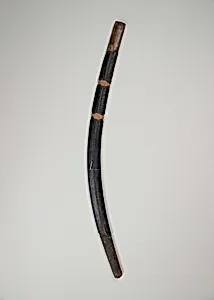
Sword Scabbard
Unknown Artist
19th century
Dimensions
H. 31 in. (78.7 cm); W. 1 7/16 in. (3.7 cm); Wt. 8.5 oz. (241 g)
Classification
Swords-Accessories
Culture
Persian
Department
Arms and Armor
Museum
Metropolitan Museum of Art, New York, NY
Credit
Bequest of George C. Stone, 1935
Accession Number
36.25.1642
Rights
Public Domain
Art Historical Context
This elegant 19th-century Persian swordabbard, standing an impressive 31 inches tall yet remarkably slender at just 1 7/16 inches wide and weighing only 8.5 ounces, exemplifies the exquisite craftsmanship of Qajar-era arms and armor. Housed in the Metropolitan Museum of Art's Arms and Armor Department as part of the bequest of collector George C. Stone in1935, it served as a protective sheath for a sword blade, blending functionality with cultural prestige. In Persian society, such scabbards were more than mere accessories—they were symbols of status, valor, and artistry, often carried by warriors, nobles, or dignitaries during ceremonies and battles. The 19th century marked a period of refined metalworking traditions in Persia (modern-day Iran), where objects like this reflected the fusion of Islamic artistry and martial heritage. Though the work of an unknown artisan, its precise dimensions suggest a balance of portability and presence, inviting us to envision it sheathed at a royal courtier's side. Today, this piece invites visitors to appreciate how everyday tools of war became canvases for cultural expression, bridging history and beauty in the Met's renowned collection.