
Sword with Scabbard Mounts
Unknown Artist
ca. 600
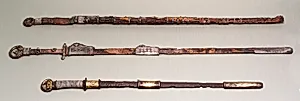
Medium
Iron, bronze, gold, silver, wood
Dimensions
L. 39 1/4 in. (99.7 cm)
Classification
Swords
Culture
Chinese
Department
Arms and Armor
Museum
Metropolitan Museum of Art, New York, NY
Credit
Gift of George D. Pratt, 1930
Accession Number
30.65.1
Rights
Public Domain
Art Historical Context
This exquisite *Sword with Scabbards*, dating to around 600 AD, hails from ancient China during the transitional Sui dynasty or early Tang era—a time of unification and cultural flourishing after centuries of division. Crafted from iron for the blade, with lavish bronze, gold, silver and wood elements adorning the scabbard, it measures an imposing 39¼ inches long. Such opulent materials were reserved for elite warriors or nobility, blending functionality with artistry in the Arms and Armor tradition. The sword's construction highlights masterful metallurgical techniques of the period: iron forged for strength and durability, while gold and silver inlays or overlays on bronze fittings added symbolic prestige, evoking imperial power and protection. Wood likely formed the scabbard's core, sheathed in finery that showcased the wearer's status. These decorative mounts were not mere embellishments but cultural statements, reflecting Confucian ideals of the scholar-warrior. Today, this rare survivor—gifted to the Metropolitan Museum of Art in 1930 by George D. Pratt—offers a window into China's martial heritage, where weapons doubled as status symbols and ritual objects. Visitors, marvel at how such a piece bridged warfare and elegance in one of history's most innovative dynasties!