
Table
ca. 1790
Medium
Oak, Japanese lacquer and ebony veneer, gilt bronze, verde antico marble
Dimensions
H. 37-3/8 x W. 52-7/8 x D. 24-1/4 in. (94.9 x 134.3 x 61.6 cm)
Classification
Woodwork-Furniture
Culture
French
Department
European Sculpture and Decorative Arts
Museum
Metropolitan Museum of Art, New York, NY
Credit
Gift of Mr. and Mrs. Charles Wrightsman, 1977
Accession Number
1977.1.4
Rights
Public Domain
Art Historical Context
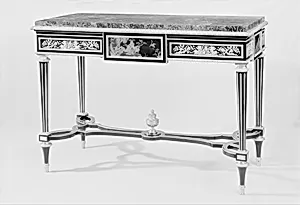
This exquisite table by Adam Weisweiler, crafted 1790, exemplifies the of late Louis XVI French furniture making. Standing at nearly 3.5 feet high with a generous 52-inch width, it served as a luxurious pier or console table in aristocratic salons, designed to display fine objects or hold a marble-topped surface for decorative effect. Weisweiler, a master ébéniste (cabinetmaker) active in Paris, was renowned for his stamped masterpieces that blended Neoclassical elegance with exotic flair, catering to the elite on the eve of the French Revolution. The table's construction highlights innovative 18th-century techniques: a sturdy oak carcass veneered in rare Japanese lacquer panels—highly prized imports symbolizing global trade and orientalisme—and contrasting ebony, accented by ornate gilt bronze mounts. The verde antico marble top, a green stone evoking ancient Roman grandeur, adds opulent weight and durability. These materials underscore the opulence of pre-Revolutionary France, where furniture became a status symbol blending craftsmanship, imported luxuries, and gilding for dramatic light play. A gift to the Metropolitan Museum of Art from Mr. and Mrs. Charles Wrightsman in 1977, this piece captures the refined taste of the ancien régime, inviting visitors to imagine its role in candlelit evenings of refined conversation.