
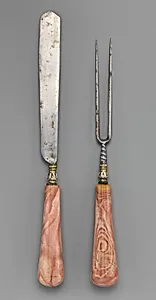
Table fork
Unknown Artist
18th century
Medium
Steel, agate, bronze
Dimensions
Length (fork .45): 9 3/8 in. (23.8 cm)
Classification
Metalwork-Steel
Culture
French
Department
European Sculpture and Decorative Arts
Museum
Metropolitan Museum of Art, New York, NY
Credit
Gift of R. Stuyvesant, 1891
Accession Number
91.16.45
Rights
Public Domain
Art Historical Context
This elegant 18th-century French table exemplifies the refined metalwork of the European decorative arts tradition. Crafted from steel, agate, and, it measures 9 3/8 inches in length, making it a practical yet luxurious utensil for formal dining. Donated to the Metropolitan Museum of Art in 1891 by R. Stuyvesant, it now resides in the Department of European Sculpture and Decor Arts, classified as metalwork in steel. In the opulent world of 18th-century, table forks like this one marked a shift in dining etiquette among the aristocracy. Once a novelty, forks had become essential by the Rococo era, symbolizing sophistication and hygiene during elaborate banquets. The steel tines provided durability for piercing food, while the agate inlays and bronze elements added a touch of jewel-like splendor, blending functionality with high craftsmanship. Artisans employed precise techniques such as forging, chasing, and inlaying to create these objects, turning everyday tools into status symbols. This fork invites us to imagine the candlelit suppers of Versailles-era nobility, where every detail—from the curve of the handle to the gleam of the materials—reflected cultural refinement and artistic excellence.