
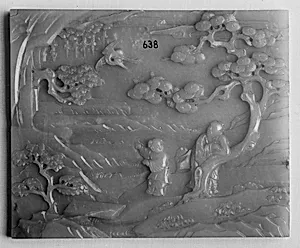
清乾隆 放鶴圖玉屏|Table screen with a scholar and a crane
Unknown Artist
Medium
Jade (nephrite)
Dimensions
H. 5 1/2 in. (13.9 cm); W. 6 11/16 in. (17 cm); D. 3/8 in. ( 1 cm)
Classification
Jade
Culture & Period
China · Qing dynasty (1644–1911), Qianlong period (1736–95)
Department
Asian Art
Museum
Metropolitan Museum of Art, New York, NY
Credit
Gift of Heber R. Bishop, 1902
Accession Number
02.18.638
Rights
Public Domain
Art Historical Context
This exquisite jade table screen, crafted during the Qianlong period (1736–95) of China's Qing dynasty (16441911), depicts a scholar gently releasing a crane. Carved from nephrite jade, a material revered in Chinese culture for its purity, durability, and luminous translucency, the piece measures a delicate 5½ inches high by 6⅝ inches wide. Such tabletop screens were prized furnishings for scholars' studios, placed before inkstones to ward off dust while serving as elegant displays of virtue and refinement. The Qianlong era marked the zenith of imperial jade carving, with palace workshops producing masterful works under the emperor's patronage. Nephrite's fine grain allowed intricate relief carving, evident in the flowing robes of the scholar and the crane's graceful wings—symbols of scholarly wisdom and longevity, respectively. Together, they evoke Daoist ideals of harmony with nature and immortality, resonating with Confucian literati values. A gift to the Metropolitan Museum of Art from Heber R. Bishop in 1902, this anonymous masterpiece highlights the technical virtuosity of Qing artisans, transforming humble stone into a timeless emblem of imperial elegance.