
Medium
architecture, interiors
Classification
architecture, interiors
Department
Smithsonian Collection
Museum
Smithsonian American Art Museum
Credit
Gift of Henrietta Haller
Accession Number
1904-16-228
Rights
Public Domain
About this artwork
Research in Progress
Art Historical Context
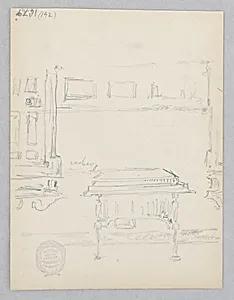
Robert Frederick Blum (1857–1903), a prominent American artist of the late 19th century, *Table* in 1879, when he was just 22 old. This early work falls into the category of architecture and interiors, a detailed depiction of a domestic or architectural space centered on a table. As a young painter and illustrator trained in New York, Blum was emerging during a time when American artists were exploring realistic portrayals of everyday life, European influences with national subjects. His focus on interiors reflects a growing interest in intimate, lived environments amid the Gilded Age's rapid urbanization. The artwork's medium highlights the technical precision required for rendering architectural elements and furnishings, possibly through drawing, watercolor, or etching—techniques Blum mastered. Interiors as a genre allowed artists to showcase light, texture, and spatial depth, inviting viewers to ponder the stories behind ordinary objects like a table, symbolizing hearth and home. Though research is ongoing, *Table* offers a glimpse into 1870s American domesticity. Generously gifted to the Smithsonian American Art Museum by Henrietta Haller, this piece enriches our understanding of Blum's formative years before his travels to Venice and Japan shaped his later exotic genre scenes. A quiet testament to everyday beauty, it reminds us how simple settings can capture the era's cultural pulse.