
Tablecloth
Unknown Artist
1609
Medium
Linen
Dimensions
L. 127 x W. 80 inches (322.6 x 203.2 cm)
Classification
Textiles-Woven
Culture
Flemish or Dutch
Department
European Sculpture and Decorative Arts
Museum
Metropolitan Museum of Art, New York, NY
Credit
Gift of Mrs. Herbert L. Satterlee, 1924
Accession Number
24.90
Rights
Public Domain
Tags
Art Historical Context
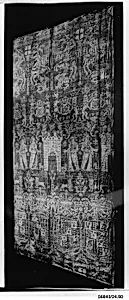
This magnificent linen tablecloth, woven in 1609 by an Flemish or Dutch artisan, exemplifies the exquisite textile craftsmanship of the early 17th-century Low Countries. Measuring an impressive 127 by 80 inches—large enough to cover a grand banqueting table—it belongs to the Metropolitan Museum of Art's European Sculpture and Decorative collection, gifted in 1924 by Mrs. Herbert L. Satterlee. Its woven design incorporates heraldic motifs, including lions, men, coats of arms, symbols of nobility, strength, and lineage that would have adorned the homes of prosperous families. In the context of the Dutch Golden Age and Flemish textile traditions, linen like this was a prized luxury, produced in regions renowned for fine weaving techniques such as damask or drawnwork (though specifics here remain unidentified). These cloths served not just practical purposes but as status symbols, displayed during feasts to impress guests with familial heritage and wealth. The scale and detail reflect the era's booming trade in linens, exported across Europe. Today, this tablecloth offers a tactile glimpse into domestic splendor, highlighting how everyday objects carried profound cultural weight. Visitors can appreciate its preservation as a rare survivor from a time when textiles rivaled paintings in artistic prestige.