
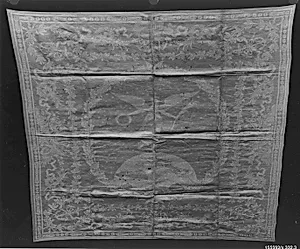
Tablecloth
Unknown Artist
1815
Medium
Linen
Dimensions
H. 45 x W. 43 inches (114.3 x 109.2 cm)
Classification
Textiles-Woven
Culture
German
Department
European Sculpture and Decorative Arts
Museum
Metropolitan Museum of Art, New York, NY
Credit
Deposited by Mary D. Brooks, 1926
Accession Number
X.332.3
Rights
Public Domain
Art Historical Context
This elegant linen tablecloth, crafted in Germany around 1815, exemplifies the refined domestic arts of early 19th-century Europe Measuring a generous 45 by 43 inches, it was designed to grace dining tables, transforming everyday meals into occasions of hospitality and display. As a woven textile from the European Sculpture Decorative Arts collection at The Metropolitan Museum of Art, highlights the era's emphasis on functional beauty in household linens. Linen, prized for its durability, breathability, and subtle sheen, was a staple of German textile production during this period—a time of post-Napoleonic recovery and burgeoning Biedermeier sensibility, which favored understated craftsmanship. Woven techniques allowed for intricate patterns (though specifics here remain undocumented), reflecting skilled handloom work that supported local economies and family traditions. Such tablecloths were essential in middle-class homes, symbolizing cleanliness, prosperity, and social grace. Deposited by Mary D. Brooks in 1926, this anonymous masterpiece invites us to appreciate the unsung artistry of everyday objects. It reminds visitors that decorative arts like this wove together utility, culture, and quiet elegance in daily life.