
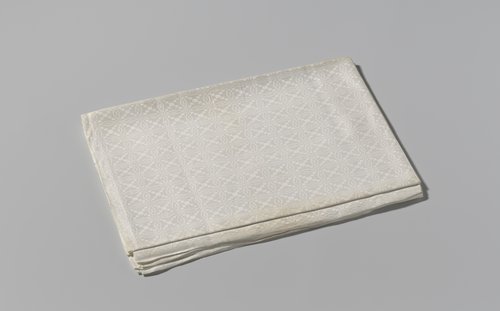
Tafellaken
Unknown Artist
1630 - 1670
Medium
linen (material)
Dimensions
249; 180
Rights
Public Domain
About this artwork
height 249 cm x width 180 cm
Art Historical Context
**Tafellaken (Tablecloth)** *Unknown Artist, 1630–1670, Linen, 249 × 180 cm* Step into the opulent households of 17th-century Europe with this grand *Tafellaken*, a linen tablecloth from the Dutch Golden Age era. Spanning an impressive 249 cm in height and 180 cm in width—nearly the size of a large dining table—this textile exemplifies the era's mastery of fine linen production. Created between 1630 and 1670, it reflects the prosperity of the Netherlands, where trade in flax and skilled weaving made such items everyday luxuries for the merchant class. Linen, derived from flax, was prized for its durability, whiteness, and ability to showcase intricate weaves or embroidery. Tablecloths like this one served not just practical purposes but as symbols of hospitality and status, adorning banquet tables during feasts and family gatherings. Though the artist remains unknown, the sheer scale suggests it was crafted for communal dining, highlighting the cultural importance of domestic textiles in a time when homes doubled as showcases of wealth. Today, this artifact invites us to appreciate the unsung artistry of anonymous makers, whose handiwork wove threads of history into the fabric of daily life. A testament to 17th-century craftsmanship, it reminds visitors of how even utilitarian objects carried profound elegance.